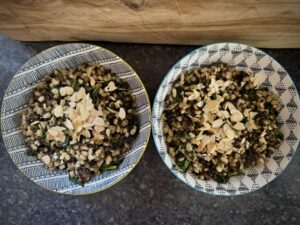
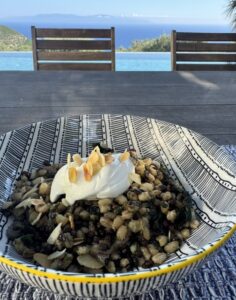
Barley lentil salad with amaranth

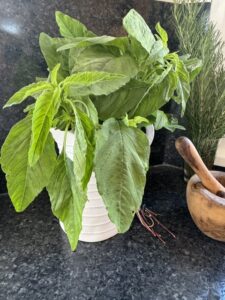
It’s June here in Kefalonia and salad time under a sunny blue sky.  The seasonal wild greens – ‘horta’ – which you now find in some green grocers are a leafy vegetable called Vlita.  It’s in season from early summer until autumn, June to September.


When I looked up the English translation and found ‘amaranth’ I was none the wiser;  not a leafy veg I’ve cooked before, although amaranth seed has been in my line of sight since I first studied nutrition.  A remarkable gluten free, high protein seed that’s definitely worth adding to your library of recipes.  I’ve added some info about it below at the end of my recipe.

The whole amaranth plant can apparently be eaten, not just the leaves and seeds but the flowers and root as well.  What a star plant, right!?

The leaves are similar to spinach, in fact cousins, since they’re part of the same ‘amaranthaceae’ family, but with a milder flavour when cooked, none of the slightly bitter aftertaste spinach can have.  So subtle, however, that it definitely needs the recommended fried onion and lemon juice to zhoosh it up.

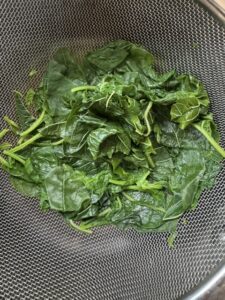
I was told the young amaranth leaves only need frying for about 10 minutes, but wild greens are often boiled here in Greece, and for good reason.  Even briefly boiling them will help reduce the amount of oxalates they contain.  You can find a word – or twenty! – below** explaining a little about these so-called anti-nutrients.  Why it’s best for some to control how many high-oxalate foods they consume.

This recipe came about because Nick-up-the-track gave us a big bag of vlita from his garden.  Not a clue what to do with it but between him and a few Greek recipe books plus online scrolling I decided I’d use them with whatever dinner I could rustle up.

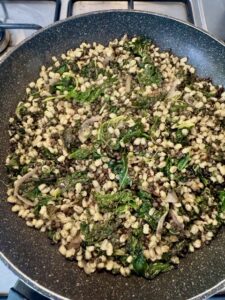
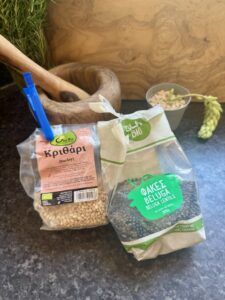
We had left-over cooked barley from a delicious salad inspired by St Peter’s restaurant. and a bowl of cooked lentils – always lentils in our fridge!   Together with the freshly prepared amaranth, the resulting meal was delicious.  Topped with toasted almonds and a dollop of yoghurt, it turned into a perfect Greek dish for us.

Instead of amaranth, you could use spinach or kale.  And you can replace the gluten-heavy barley with brown or mixed rice – or quinoa, which is yet another cousin in this spinach-amaranth ‘Amaranthaceae’ family. How very Greek, all these cousins!!

Ingredients for 2:

150g cooked barley (or brown rice, quinoa…).  Follow your packet instructions re timings.  Mine were all in Greek but 30 mins worked.
150g cooked beluga lentils. Brown lentils might make the end dish look too sludgy
c 150g amaranth or spinach leaves, roughly chopped and lightly boiled (to reduce those oxalates)
a generous swish of olive oil to lightly fry
1 red onion, sliced
2-3 cloves garlic, crushed
freshly ground pepper
Juice of one lemon

Topping:
toasted slivered almonds
dollops of any yoghurt you love.  Or not!

Method:

Heat a generous slosh of olive oil in a frying pan on medium heat.
Add the sliced onion and gently cook until transparent.  Then add the crushed garlic and stir for a minute.
Next, mix in the lightly boiled chopped greens followed by the cooked barley and lentils.
Gently combine, add lemon juice & pepper – and a little more olive oil for some shine.

That’s about it, so easy, but do a taste test and adjust to your liking.
Serve on a plate or pasta bowl, top with the almonds and a dollop of yoghurt.

Let me know how it goes!

*Amaranth seed is a complete protein, like chia and hemp seed.  This means it has all 9 essential amino acids that you can only get through foods like meat/seafood/soybeans.  You can’t make these essential amino acids in your body, it has to come from food.

Given that amino acids are the “building blocks of protein”, and you need protein for …everything! it’s good to know that amaranth seed is such an excellent source.  Especially if you’re vegan or vegetarian.

The flour is gluten free, ‘ray!  Apparently on the heavy side and best combined with other gf flours to give a lighter bake.  The seed’s flavour is said to be a bit earthy or grassy.

These amaranth leaves from Nick have inspired me to try out all sorts of amaranth seed recipes next month. Porridge-type b’fasts and desserts, or polenta-ish sides, or as a thickener in soups.  And I found this amaranth biscuit recipe which sounds delicious.

** Oxalates:
Like spinach and many other healthy foods, amaranth is high in these so-called anti-nutrients.  What they do is bind to minerals in the food you’ve eaten, and form a compound that passes right through you.  That means you can’t utilise any of the benefits these minerals should be giving you (think calcium, magnesium, potassium etc for bone health alone!)
Oxalates are important to be aware of if you’re prone to kidney stones, or have a kidney condition, or osteoporosis or some malabsorption digestive disorders eg. IBD, coeliac disease.
Saying all that, amaranth leaves, like spinach, are still a health-giving, delicious foods.  A great fibre food to nourish your gut microciome, with amaranth having super high amounts of Vit C and K, whilst spinach boasts great Bs, folate, magnesium a.o.  There are many delicious, healthy oxalate foods out there, so take a look at this link . The message in the end is to go easy and don’t eat them in excess.

Reflexology on the beach

We’re having a much-needed break from decluttering and boxing and sorting out our house back in Dorset.  Some slow time in the sun to restore and reset.  No lists of must-do chores (although the weedy garden and olive grove are hard to ignore).  No schedules or planned days, bliss!  The only routine that’s emerged is a daily morning walk and swim.

These walks have been a bit different this time.  Rather than the usual dirt-track loop around olive groves and broome-‘n-thistle-fields, we’ve been walking the beach.  Barefoot instead of trainers.
I’m noticing a difference.  My feet are looser, more flexible, as are my hips and back.  My hunched up computer-shoulders are back where they belong (until I spend another few hours online with a client or webinar!)

I’ve always had a thing about foot health, am a fan of the Foot Collective, and have various bits of their kit.  One of my very favourite pilates classes with Theresa Cooper nearly a decade ago was an hour devoted just to feet.  Floating on air is the best way to describe the rest of my day after that class.

Most of us don’t spend enough time looking after our feet, and I’m not just talking emolients or unguents or polished toenails although there’s a place for them naturally 🙂

Walking barefoot

When we walk barefoot all the small tendons, muscles and ligaments in our feet have to work harder.  They’re adjusting to the ground’s changing surface and texture.  Feet and toes grip, move and wriggle very differently to when they’re locked in shoes.  Grounding us in the truest sense.

And when our feet work better, everything upstream does too.  Knees, hips and core are stronger and balance becomes better.  The neuro receptors in our soles are activated and this improves reflexes and our awareness of our place in space, our proprioception.  We’re more in control of directional change, movement and flow.  We’re also tapping into mindfulness.  Walking slowly and with intention is important when walking barefoot. Being in the moment becomes a necessity.

There’s something else too.  Many beaches, especially here on the island, are a mix of sand and pebbles.  Luckily no glass or broken bottles or needles here, at least not by the shore where we’re walking.

Pebble walking is a thing!

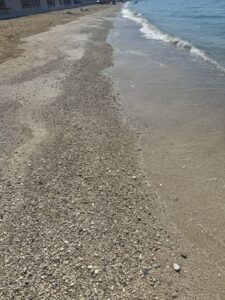
We often find a metre-wide track of tiny pebbles hugging the waterline, polished smooth by the constant wash and backwash of waves.  Walking barefoot on them is like having a fabulous foot massage.

To my surprise, there is in fact a name for this.  Reflexology walking or Stone stepping.  It’s an ancient practice in many eastern countries.  Not on beaches, but using pebbled pathways, often in places like public gardens.  You can have a read about it near the end of this article in Prime

What is reflexology anyway?

If you’re not familiar with reflexology, it’s a gentle therapy where pressure is applied to various points on our sole and foot, on ‘reflex zones’ that correspond to specific organs and systems in our body.  By ‘thumb-walking’ or ‘inch worming’ around our toes, soles, upper feet and ankles a reflexologist stimulates certain nerve endings.  Our feet have c.7000 major nerve branches but around 200,000 individual sensory receptors!  The stimulation of specific nerve endings helps calm the nervous system, reduce anxiety, lower blood pressure, reduce inflammation, increase the production of endorphins (our natural painkillers) and much more.

Walking barefoot on these tiny pebbles is in effect a self-administered reflexology treatment.  Admittedly less targeted pressure points, and only on the foot soles and not the whole foot and ankle.  However, as this article states, simply walking on bumpy things can improve your well being and mental health.

This type of  stone stepping won’t be for everyone.  Some feet are more sensitive to the ‘push’ of a pebble even when it’s polished smooth.  Or more sensitive skin might feel it’s walking on shards of glass.  So if walking on pebbles is not your barefoot thing, stick to the soft sand, but do give reflexology a go in a holistic clinic setting.  It might be interesting for you to see how you feel after a treatment, if you notice any changes.  It’s a gentle and safe therapy, definitely worth a try. I’ve been loving reflexology treatments for decades which no doubt explains why I’m also loving these bumpy beach walks.

If you’re good with pebbles, or see it as a fun challenge – and are well aware you can side-step onto soft sand any time you want 🙂 I hope all the above strengthening, balancing, healing, calming benefits of both barefoot and reflexology walking will give you reason to do much more.
Enjoy the walk and let me know how it goes!

A note of caution:

Not all pebbles are created equal.  Not all beaches are either.
As mentioned above, there are sadly too many beaches with broken glass, needles or sharp plastic bits.  Walk carefully or wear shoes, and book a reflexology treatment in the controlled environs of a clinic setting so you don’t miss out!

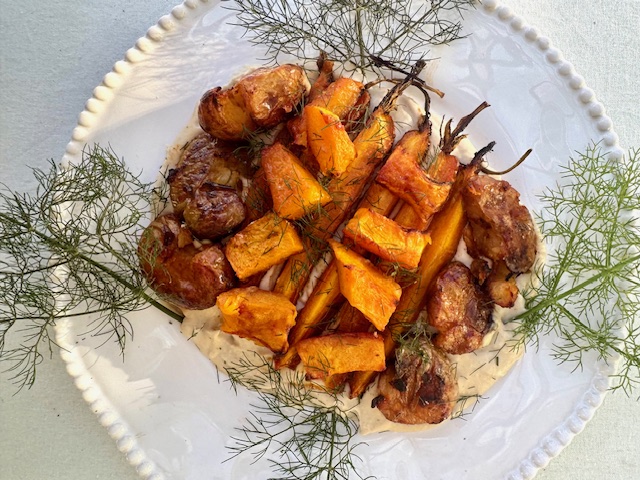
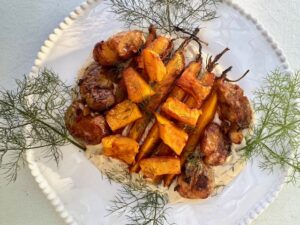
Roasted root vegetables on butterbean puree

I came across this starter recipe recently on Sarah Cobacho’s plantbaes website:  maple roasted carrots on a butter bean dip.  Delicious, but I wanted to continue this year’s heart health theme so I added an unusual player to the ingredient list, namely cooked potato.

This isn’t a veg you’d normally associate with heart health, in fact potatoes can spike blood sugar significantly and cause weight gain if eaten in excess as they’re high in starch and have a high glycaemic index. For these reasons all starchy vegetables should be part of your diet, but treated with respect, eaten in moderation.
However, something fascinating happens when you cook and refrigerate potatoes overnight.  A process called retrogradation.  To find out what this process is and how it can make the humble spud a healthier vegetable see the short paragraph with asterisk at the end of the page.

I’ve made this dish a number of times, loved it also with curry powder, so that’s an option if you like a more defined taste.
In this recipe I’ve added butternut to the mix.  For more diversity, for more of that rainbow on your plate – and because I had a butternut squash given to me last week 🙂

This butter bean puree is a great way to add protein to a vegetable meal.  Protein is a vital micronutrient needed daily for the growth and repair of body cells and the functioning of your immune system, for glucose balancing and metabolic health, and for overall ‘thriving’.

Ingredients for 4:

Roasted Vegetables:

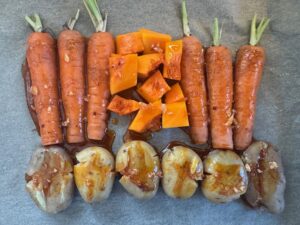
4 medium carrots, halved with some of their green tops intact
8 small cooked potatoes from the fridge* (or par boil them now)
Slice of butternut squash, c 125g, cut into chunks
3 tbsp olive oil
1 tsp maple syrup
2 crushed garlic
1 tsp smoked paprika
sea salt to taste

Butter bean puree

1 can butter beans, 400g (c240-ish drained)
2 tbsp tahini
1 peeled garlic
1 tsp maple syrup
juice from 1/2 lemon
3 tbsp olive oil
sea salt
cold water if needed for a smooth texture

Optional: 1 tsp curry powder or powdered garam masala

To finish:

I chose fennel fronds as their new growth is delicious, however chopped dill or parsely will work.
c 12 walnuts, crushed

Method:

Preheat the oven to 210 C (410F) and line your oven roasting pan with a sheet of parchment paper.
Use the potatoes you boiled or steamed yesterday, which you refrigerated overnight, to add half-way through the roasting.  Or parboil 8 small raw potatoes now.
Then lightly ‘smash’ them with a potato masher, to break the skin so they crisp well.

Mix together the olive oil, maple syrup, smoked paprika, garlic, sea salt.
Put all the veg into a large bowl and gently coat with the olive oil mixture.  Remove yesterday’s refrigerated tatties from the bowl after coating, as they’re already cooked!   You’ll add them to the roasting pan half-way through so they colour but don’t overcook.
If you’re using freshly parboiled potatoes they go into the oven with the carrots and butternut.

Line your vegetables onto the parchment paper and bake for 20-25 minutes, turning them over half-way through to ensure they don’t burn, and adding your previously cooked potatoes at this point.
After 20-25 mins use a fork to test everything is to your liking.

Butter bean puree:
Add all the ingredients to a high-speed blender or nutribullet to get that creamy finish.  If it’s too stodgy add a tablespoon of cold water until you get the perfect texture, something similar to a dip.  The taste is mellow and understated because of the marinade of the vegetables, however if you want to give it more oomph curry powder, or garam masala work well

Putting it all together:
Spoon 1/4 of the puree onto each plate and place the roasted vegetables on top.  Sprinkle with crushed walnuts and your chopped greenery.
Drizzle with more olive oil, or a chili oil if you want a kick to it.
Serve with any bread or crispbread you like – and enjoy!

Some potato facts:

* Did you know that eating cooked and refrigerated potatoes the following day – either reheated, mashed, roasted or cold, in a potato salad – greatly increases their resistant starch content?  Why is this a good thing?
Resistant starch is a form of prebiotic fibre that survives our small intestine’s digestion, thus escaping enzymatic breakdown in the upper gut.  This prebiotic fibre can therefore reach the large intestine where it provides fuel for microbes in the colon.  This process lowers potatoes’ glycaemic impact – decreasing our blood sugar spikes – and makes us feel more satiated.  Ultimately it helps with weight management.
So how does this support heart health you may be wondering?  Managing weight will always help metabolic and heart health, but also gut bacteria produce short chain fatty acids and these are anti-inflammatory… and help lower cholesterol.  Voila, we’re back to heart health, lol!   This is why I’ve added already cooked potatoes to this recipe, and the reason you can find a bowl of new potatoes in our fridge every week this month 🙂

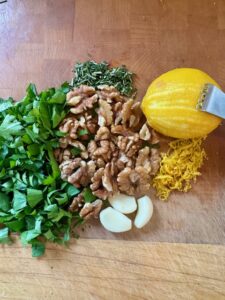
Walnut gremolata

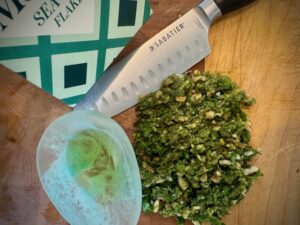
Gremolata is a vegetarian Italian herb sauce which usually contains parsley, garlic and lemon zest.  It can be added to pasta, steamed veg or meat dishes as a delicious topping.  This recipe is quick and versatile, but before I launch into it I want to sing the praises of walnuts, and why I’ve added them to this gremolata dish.  Their health benefits are wide reaching so I’ll be sharing a few more walnut recipes in the coming months.

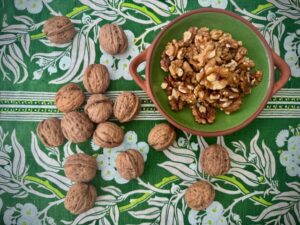
These nuts may not have the same press as say, blueberries, but they’re definitely on the ‘Superfood’ list.  Not only do they act as a prebiotic to support a healthy microbiome, but their antioxidants and polyphenols, such as ellagitannin, support brain health – our cognition and memory- and may also lower the risk of certain cancers.  When it comes to heart health they’re shining stars!
Here are some reasons why.

Firstly, they’re a great source of fibre.  We all know how important fibre is for our gut, for our gut’s microbiome, because, a.o. it promotes the growth of beneficial bacteria, which helps keep gut pathogens at bay, supports our immune health and so on.   When it comes to heart health, fibre helps lower blood pressure and LDL, the cholesterol we need to have, but also need to keep an eye on as it tends to go up as we get older.

Walnuts are also high in an omega-3 called alpha-linolenic acid. This is an anti-inflammatory fat which has a big impact on our overall health.  Regarding our heart, it helps lower triglycerides and the above-mentioned LDL cholesterol a.o.
Another benefit is that they contain an essential amino acid called arginine. We convert this amino acid into nitric oxide which helps our blood vessels relax and prevents platelet aggregation (and thus thrombosis and cardiac events).

Finally, their polyphenols!  They have quite a range including ellagitannin, mentioned above.  These lower blood pressure and also improve the function of our blood vessels a.o. and interestingly, most of these phenolic compounds are found in walnuts’ fine papery skin (90% apparently, according to Pubmed ).  So roasting, or dry-frying them to remove the skin might taste good, but it will also remove 90% of walnuts’ amazing anti oxidants.

I hope you’re now a fan!

Ingredients

for 6-8 people depending on the dish and appetite (no fear, it stores well in fridge or freezer)

40g walnuts, finely chopped
zest of 1 lemon
sprig of tender rosemary, finely chopped (exclude if you only have tough leaves as they’ll ruin the gremolata!)
parsley, about 3 or 4 sprigs finely chopped
2 cloves garlic, pressed
40-60 ml virgin olive oil depending on how thin you want your topping
sea salt and freshly ground pepper

Method:

Mix the herbs, chopped walnuts, crushed garlic and lemon zest in a bowl, then stir in the oil.
Taste, then adjust your salt and pepper seasoning.

And that’s it.  Quick and easy and you can store it in the fridge for about 5 days, or freeze up to a month.

Buon appetito!


Christmas lentil bowl

I wanted to make an easy dish to fall back on for those times over Xmas when you think no one will want more than a bowl of soup in the evening.   A soup does it for me when I’ve over-indulged at lunch (I’m talking serious souping with loads of ingredients, not just a watery brew).  However, it doesn’t tick the box for everyone, and I couldn’t face despondent looks at this festive time of year with my ‘there’s soup if you want’.
So, this Christmas I’m prepared.

I cooked a thick lentil soup on the weekend, nothing fancy, just some added veg and herbs plus red miso at the end to give it more depth of flavour.

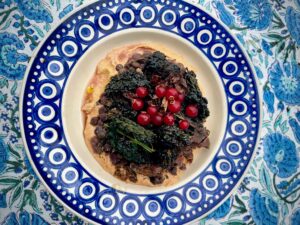
Once cooked I drained the liquid and spooned the lentil-veg onto a bed of lemony tahini.  On top of that, a green and red Xmas vibe:  roasted cavalo nero leaves (kale works), and red chicory.  Sadly the red chicory roasted to an blah brown so instead I added a few small twigs of redcurrant.  Those pops of sweet-sour berries were a delicious addition (pomegranate would also work).
So easy, a plate of Christmas lentils!

Ingredients (for  4)

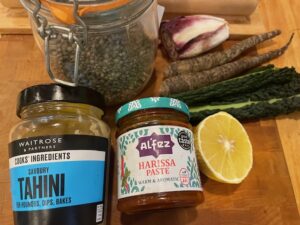
200g-300g dried lentils (anyones you like – brown, puy, beluga). Best soaked overnight (see previous blog for my soaking rant).  I always cook more than needed because you can never go wrong with some extra lentils in the fridge.
couple tbsp olive oil
1 large carrot, chopped
1 leek, green part only, chopped
handful of small broccoli and/or cauli florets, or any chopped greens
2tbsp chopped parsley
1 tbsp red miso paste – and/or tamarind paste if you love that flavour to stir in once the lentils are cooked
Enough veg broth (or water) to cover the lentils to cook. Add more liquid if they are soaking up liquid quicker than you thought

Tahini sauce:

3 tbsp tahini
2-3 tbsp lemon juice (I love lemon)
2-3 tbsp water
1 tsp harissa paste (if you like spicy, otherwise some miso paste)
Salt and pepper to taste

To roast:

3 long leaves cavalo nero, torn; or generous handful chopped kale
a few tbsp olive oil to rub and roast
optional:   1/4 tsp harissa or tamarind paste added to the oil
Decorate with sprigs of redcurrant or pomegranate for a sweeter red finish


Method:

Pour small amount of olive oil in the pot, then add the chopped leek, parsley, carrots or any other root veg, plus chopped greens if you like.  Gently fry.   I add the broccoli and cauliflower half-way through so they have a bit of a bite, but you could add them now.
Add the soaked-overnight-then-rinsed lentils and cover with veg broth or water. Cook until soft but not mushy.  Don’t forget to add any greens or broccoli etc halfway through.
Usually I taste after 10 minutes as some types of lentils cook faster than others.

At this point, drain any liquid that’s left.  Either keep the liquid to have any left-overs as a soup (this is me 🙂
Or toss.
I then add the red miso and spoon it through the cooked lentil-veg (add a little water if it has gone thick in your fridge).

Meanwhile, rub your torn green leaves with olive oil.  You could mix a smidgeon of harissa or tamarind into the oil if you love the taste.
Roast in a medium oven for about 10 minutes till crunchy.  Not burnt!  You’ll be near the oven, cooking your lentils, making your tahini sauce, so you can hover and check those leaves.

For the tahini, whisk together all the ingredients, adding water slowly as you want a consistency that’s slightly thick and smooth, but not runny.  It’s a sauce not a liquid dressing. Go easy with the harissa if you’re wary of too-spicy.

Now layer up.  Spoon the tahini sauce onto your plate then add a mound of lentil-veg and top with crunchy cavalo or kale leaves.  Red currants on the peak!

Merry Lentil Christmas to you all!

Lentil bolognese

Over the years I’ve tried variations on this lentil bolognese theme and it’s now grown into a delicious concoction of tried and tested recipes.  Packed with vegetables it cooks into a deep, rich-flavoured stewy-type sauce.
I often use puy lentils as they hold their form well, but brown lentils also work although they can become mushy if overcooked.  Best to do a taste test after c 20 mins to see if their texture is to your liking.

Last weekend I thought this recipe might work with a Christmas vibe, so I added cranberries and chestnuts to the base veg mix.
I probably added them to the pan too soon!  Most of the fab sour-fruitiness of the cranberries was cooked away, plus I couldn’t really taste the chestnuts.  On my second attempt the other night, I stirred in a handful of fresh cranberries for the last 8 mins of cooking.  Gave the whole dish a very festive look.

So, if you feel like a change over the silly season, a rice or pasta dish instead of roasted everything, then give it a try.  Perhaps even a dollop of cranberry sauce on top!

Some lentil advice:

I always soak lentils despite packet instructions, or the powers that think-they-be, claiming it’s not necessary as they’re small.

Small or not, they belong to the  pulse/bean/legume family, and this family contains oligosaccharydes, a type of carbohydrate (it’s the ‘O’ in FODMAP* ….ohhh!).
Our gut microbes break down these carbs, and in doing so, produce beneficial compounds but also gases which can cause bloating/wind/discomfort for some.
Soaking overnight will reduce the amount of  ‘Os’  and make them easier to digest.  And this soaking will also reduce the amount of phytic acid that we mainly find in the outer layer of the pulse, something that can interfere with enzymes that help us digest.  Phytic acid also binds to minerals in our food, and can prevent their absorption.  We need minerals!  Our calcium, magnesium, iron, zinc, potassium….so there’s only gains to be had by soaking those lentils!
Ok, enough lentil chat.

Ingredients

serves 4, with rice or pasta

160 g soaked lentils. I used puy but try others; be aware of cooking time as some turn mushy
3 tbsp olive oil
1 onion, finely chopped
1/2 leek, green part, chopped
1 stick celery, chopped
1 large carrot, chopped
3 large or 4 small garlic cloves, pressed or finely chopped
1 can chopped tomatoes
2-3 tbsp Dorsetshire sauce (vegan type of Worcestershire sauce with no anchovies; Bonsan and The Condiment company are two examples of other vegan Worcestershire sauces)
1/2 litre vegetable broth plus half to one cup more added near the end of cooking IF you want your bolognese more liquid
leaves of 4 sprigs of fresh thyme
chopped fresh parsley for decoration

Method

Soak the lentils the night before, discard the water, rinse and sieve then you’re ready to start.

Add olive oil to a deep pan on a medium heat, and cook the onions until transparent.  Stir in the chopped leek and cook until slightly softened.  Add the celery, carrots, garlic and gently cook for about 15 minutes.  Then come the lentils, can of chopped tomatoes, tomato puree, veg stock and the thyme leaves.

Simmer on a low to medium heat for about 40 minutes until the sauce has thickened and the lentils are cooked to your liking (I usually do a taste test around 30-35 minutes or earlier, depending on the type of lentil).

For a Christmas flavour, add cranberries for the last 8 minutes of cooking and enjoy with brown or mixed rice, or any pasta your digestion loves 🙂


*FODMAP  stands for fermentable oligosaccharides, disaccharides, monosaccharides and polyols, a group of  short chain fermentable carbs which can cause distressing IBS-type symptoms.  The low FODMAP diet aims to exclude/reduce the amount of these in your daily foods and then try a slow introduction of each type to see which may be your symptom trigger.  This diet is only meant to be short-term as it’s very restrictive.

Oxytocin, our love and trust hormone

When I was first studying naturopathic nutrition the term ‘community’ didn’t really come up in our studies.  Back then it would’ve had a different meaning to now, more about shared geography, perhaps shared work or dependency, for instance ‘being part of a farming community’.
Then the meaning expanded to include shared causes and identities. Today it encompasses far more.

We’ve always been wired for connection, our survival historically dependent upon us working together, living in groups.  Our nervous systems, in fact, see social isolation as a threat.  It’s little wonder that in our current world, where isolation is endemic, the concepts of community and social connectedness have moved into the bright spotlight of the world of health.

Belonging can change our biology

If we feel accepted and have a sense of belonging it not only impacts our happiness or mental state but also our physical health.  We all know that the brain doesn’t act as a separate entity, it works in synergy with our organs and systems.   And yet, despite this ‘knowing’, it’s still fascinating to learn that a sense of belonging can literally change our biochemistry.  Pain is reduced, inflammatory markers and blood pressure go down, our immune system is stronger, dementia risk lowers, we even live longer (Dan Buettner coined the term Blue Zones in his books, to describe areas in the world where people are reaching a ripe old age.  Social connection plays a big part in their longevity).

How does in-group bonding make biological changes?

There are many different mechanisms in play, such as the rise in our feel-good endorphins and neurotransmitters, the lowering of cortisol, improvement of vagal tone and HRV, the down-regulation of CTRA a.o. but here I’m going to focus on just one fascinating compound.

When studying our endocrine system at college I was introduced to a hormone called oxytocin.  It’s still one of my favourites in biology, not just because it’s called the love hormone, although that helps 🙂

Oxytocin plays a major role when it comes to trust and bonding.  From sexual intimacy, childbirth and breastfeeding, to stroking your pet – and your cat purring back, because it, too, has this hormone.  And when you get that warm buzz being hugged by someone, or hanging out with your friends, rising oxytocin is in the room.

I won’t go into the details of how we make and release this hormone, (and then release even more according to our body’s needs.  So many feedback loops are working quietly and impressively behind the scenes).  But in order to appreciate how oxytocin can make biological changes, here, below, are a few examples.  I’ve kept it simple for all our sakes, I’m not a biologist or neuro endocrinologist!
Many of the papers I found used administered oxytocin, or were animal and not human studies.  However, there is a lot of evidence and literature discussing the health-protective mechanisms of our naturally produced oxytocin.

Some ways oxytocin helps us

We have oxytocin receptors all over our body where this hormone can bind and exert various changes.  One is in our blood vessels where it triggers the release of nitric oxide, a tiny, powerful molecule which a.o. relaxes blood vessel walls, widens them which results in lowering blood pressure.
In the brain, oxytocin acts on different regions to decrease our ‘fight-or-flight’ reflex (sympathetic nervous system), and increase our ‘rest-and-digest’ or ’rest-and-relax’’ reflex (parasympathetic nervous system).  By doing this it lowers fear and anxiety, helps us feel safe.  In this safe mode, this parasympathetic mode, our heart rate slows down and once again, blood pressure lowers.

Oxytocin also promotes the release of anti-inflammatory cytokines like IL-10.  It also suppresses pro-inflammatory ones such as IL-6 and CRP (Szeto A et al. Pubmed. Front Immunol 2020).  And it does more of the same from another direction: by supporting our parasympathetic nervous system it decreases cortisol, one of our stress hormones, which ramps up inflammation when it’s chronically high, eg. from ongoing stress.
As for our immune health, one way that oxytocin supports this system is by promoting tissue repair and wound healing.  It does this by increasing our M2 macrophages, the white blood cells that clear debris and rebuild tissue. (Pfeifer et al. Pubmed, Mol. Pain 2020).

When our body is inflamed our immune system is weakened, so we become more vulnerable to illness and disease.  Interconnectedness in body and mind, not just our social connectedness.

How can we naturally increase this wonder hormone?

There are so many different ways, which is heartening as we’re all very individual.  Pets and hugging and breastfeeding don’t tick the box for everyone.

Bonding and community

Firstly (only as it’s the theme of this blog), through social bonding.  Being with family, partners, friendly work colleagues, hobby groups, faith groups, yoga classes.…
Hanging out together, eating together, listening, talking, having eye contact, confirming trust.  Not feeling isolated and lonely.  These will all increase oxytocin levels.
And that warm feeling which rises when you’re helping a stranger or friend – even, amazingly, simply planning this act of kindness – is also triggering oxytocin.

Physical touch

Physical touch like hugging, cuddling, holding hands, all link to oxytocin’s important biological role for our species.  Where would sexual intimacy, birth and motherhood be without this ‘bonding’ hormone?!  Where would the close feeling of friendship be without a hug, and why do we feel so great after a relaxing massage!  Lots of oxytocin thoughts to ponder.

Stroking pets will not only increase your, and your pets’, levels, but simply making eye contact with an animal you trust will signal affection in your brain and activate oxytocin release.  Amazing!  This is good reason why ‘animal-assisted therapy’ works.

Relaxation and mindfulness

Mindfulness, deep breathing, slow measured walking or dancing, being in nature, listening to music, all these are shown to lower cortisol and indirectly raise oxytocin.  Moving away from the fight-or-flight sympathetic nervous system into the rest-and-relax parasympathetic.

In-group bonding

And then there’s collective effervescence, what a brilliant name!  Coined by sociologist Emile Durkheim it describes the energy and jubilance, the goosebumps we feel during a shared experience, which trigger oxytocin release.  This can be at a rock concert, demonstration, singing in a choir, or moving together at a yoga retreat.  All of these, once again, are forms of social bonding, but with sparkling synchronicity.  (PubMed Frontiers in Psychology, 2022)

Can we increase levels with our diet?

In short, no, there aren’t any specific foods which directly increase oxytocin.  However, by eating for mood and brain health we support our hormones and nervous system, and indirectly, our oxytocin balance.  Some good examples are foods or supplements with magnesium, nature’s ‘relax’ mineral, or tryptophan-rich foods (tryptophan being the precursor to serotonin), L-theanine (in tea), and adaptogens like rhodiola rosea or ashwaganda a.o.  And, as always, avoiding highly processed and pro-inflammatory foods, that’s a given.

A final word…

I’m thinking about the feelings I’ve shared here on oxytocin.  Undeniably, I’m in awe of this hormone, and awe in itself is an emotion which activates our parasympathetic nervous system.  Lowering inflammation, strengthening our immune system, both of which are hallmarks of oxytocin.
Awe is also an emotion that’s often shared and heightened when we experience it as a group.  So it seems a worthy addition to our social connectedness and bonding toolbox, don’t you think?

Note:

If you’d like to find out more about the importance of community and friendship for our health, there’s an excellent 2021 podcast, episode 226, from ‘Feel better, Live More’ which is a compilation of several episodes, which I think you’ll find uplifting and enlightening.

A tour around some Omega-3s

When clients come for an initial consultation they often tell me they’re already taking an omega-3 supplement. Sometimes it’s on the advice of a physio for a painful knee, or a dermatologist for a skin complaint, an optometrist suggesting it may help protect against macular degeneration. Others have read an article, a book, or listened to a podcast explaining how certain omega-3 fatty acids might help heart or brain health, or their rheumatoid arthritis, or even increase life span.
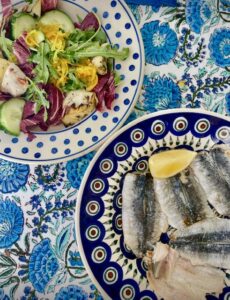
This is all to some degree true.  Either there is evidence showing clear benefits, or at least promising possibilities.  Certainly good reason for these fatty acids to be on everyone’s radar.  If we understand what they are, and how they might support our health, we can make more informed choices about what we eat and whether or not supplementation is right for us.

So here’s a tour – shorter at least than a full-day seminar these fatty acids could easily warrant – focusing on two omega-3s which have held centre stage in the health world for several decades.

What’s in a name? Are omega-3s, fish oils, and EPA/DHA all the same?

Omega-3s are a family of fatty acids (= components of dietary fat).  The name “omega-3” comes from their chemical structure, and not, as someone once suggested, because there are three fatty acids in this family.
These three key family members all have tongue-twister names, thankfully shortened to acronyms:

  • ALA (alpha-linolenic acid): a plant-based omega-3 with excellent health benefits of its own (a topic for another time or else this blog will turn into a book).
  • EPA (eicosapentaenoic acid) and DHA (docosahexaenoic acid): two marine-based omega-3s that will be the focus of this tour, owing to their wide-ranging health benefits and the extensive body of research surrounding them.

Where do EPA and DHA come from?

Unlike cholesterol, our bodies can’t make EPA and DHA, which is why they’re called ‘essential’ fatty acids because we have to get them from our diet – from fish.

All fish contain some EPA and DHA because they either eat microalgae – the original source of these fatty acids – or they eat smaller fish, which have eaten microalgae.
Good news for plant-based eaters since microalgae supplements are widely available, and more food products are now being fortified with algae-based EPA and DHA.

Back to fish!  While most species contain some omega-3s, fatty fish are definitely the stars of the show. Cold-water fatty fish like salmon, mackerel, anchovy, sardine, and herring (SMASH, an easy acronym) store more fat, and therefore have more EPA and DHA than lean white fish. They need these fats for energy in cold waters and to keep their cell membranes supple.  EPA and DHA have similar effects in the human body, helping our arteries stay flexible and making blood ‘thinner’ or less sticky. Both actions are part of their bigger heart-protective role.

Given this marine link, it’s easy to see why the names EPA and DHA are often used interchangeably with “fish oils,” but I’m going to nitpick here:   fish oils contain EPA and DHA, but they also contain other nutrients such as vitamin D, vitamin A, and various minerals.
This is important when you’re supplementing.  If it’s specifically these two anti-inflammatory fatty acids, EPA and DHA, that you’re after, do check the supplement label.  A bottle may state “1000 mg fish oil”, but the ingredient list may show it only contains 200mg EPA and 120mg DHA.  Or, as someone recently discovered, as little as 18mg and 25mg.
How much do we need?

General recommendation is around 1000 mg per day, although some sources suggest lower, around 450mg, and some clinical trials use much higher doses.
Acording to Dr Bill Harris in this Zoe interview  an average serving of oily fish contains approx 1200 mg EPA & DHA, so, ideally, we should be eating some sort of oily fish around 4-5x weekly.

In the above podcast interview Dr Harris adds that DHA and EPA in supplement form can be in any ratio; a split like 600mg EPA to 300mg DHA is fine.
The reason for these varying ratios is due to research suggesting the two fatty acids have different qualities.  DHA may be more supportive for brain health, whilst EPA may be beneficial for mental health and depression.  EPA is also thought to have stronger anti-inflammatory effects and also might be better for heart health.
However, as a believer in the ‘whole being greater than the sum of its parts’, and given that fish and microalgae contain both these fatty acids, I usually like to recommend supplements with similar (ish) ratios.

The elephant in the room: contaminants

One concern with fish oil is heavy metal contamination. Mercury often gets the spotlight, but other heavy metals can accumulate too, depending on where fish live.

Large, long-living predatory fish at the top of the food chain tend to build up the highest levels (for example, tuna, swordfish, shark, king mackerel, and marlin), so, avoiding these will help reduce your toxic load.

Here are some useful links on safer fish choices (USA based):

US FDA: Advice about eating fish (PDF) Advice for pregnant women, but with a mercury section

And the NRDC fish guide

High-quality fish oil and microalgae supplements are normally screened for contaminants and companies will often detail their purification processes online.  If not, you should be able to email them and ask if these processes are in place.
You may find IFOS (International Fish Oil Standards) certification on some labels, which means there has been third-party testing for contaminants.

A quick aside here:  not all supplements are created equal.  Price will often reflect quality, although, saying that, you don’t need to buy the most expensive omega-3 supplement on the market.  There are good options that are more affordable.   More important is to be wary of random “special offers” online unless you know the product and its quality control.

As for microplastics and BPA, they are a huge problem we’ve created in our plastic-riddled world.
I read that some supplement companies are using ultrafiltration techniques regarding the removal of micro plastics, but I believe this is more to do with the water where sustainably farmed fish live.  I haven’t found reliable or consistent information about the guaranteed removal of BPA and micro plastics in fish oil supplements sourced from ocean fish.
If you have, please let me know!

Meanwhile, the best we can do is:

  • Minimise new plastic purchases.
  • Reuse and recycle where possible.
  • Stick to the safer oily fish choices mentioned above.
  • Choose supplement brands which are transparent about contaminant testing.
  • And finally, support your body with a high-antioxidant diet, that rainbow-on-your-plate, which is at least 30 different plants, herbs, and spices a week.
Inflammation:

The first time I learned about EPA and DHA at college, it was concerning their anti inflammatory support.
Inflammation is a natural process: we get an infection or we cut ourselves and subsequently have an acute inflammatory response that’s geared to clearing the pathogen, or making us want to remain immobile so we rest and heal.  A temporary inflammatory response.

Chronic inflammation, however, is a prolonged even ongoing response, and it plays a role in many of today’s illnesses, whether it’s something as harmless as hay fever or as serious as heart disease, diabetes, cancer and neurodegenerative disorders.    

There has been considerable research into the effectivement of omega-3s and auto-immune conditions like rheumatoid arthritis, IBD, psoriasis and asthma.   Studies are promising but “still more research needed”.  However, there are convincing results regarding rheumatoid arthritis, with omega-3 supplementation improving joint health and lessening morning stiffness, tenderness and pain.   

Brain and eye health

About 60% of the brain is made of fat, with DHA forming a vital structural part.  It’s therefore no surprise that omega-3s play a significant role in brain health during all phases of life, from pregnancy, where they may lower the risk of preterm birth, to foetal brain development, right through to old age and their potential to lower the risk of dementia.

Here is a link disussing maternal DHA status during pregnancy & its impact on infant neurodevelopment, Nutrients, NLM, 2020

And brain health researcher and neuroscientist, Louisa Nicola, discusses Alzheimer’s and omega-3 near the end of this fascinating podcast with Dr Chatterjee

Dr Bryce Appelbaum, a neuro-ophthalmologist in the US, notes that “good levels of omega-3s are associated with larger hippocampal volume”, which translates to “improved memory, learning, reasoning, and enhanced neural communication, with a lower risk of vascular dementia”.

Interestingly, studies also suggest omega-3s, especially EPA, may support mood disorders such as depression.  The evidence is still mixed, hence ongoing research is needed, but consider how easy it would be to try increasing your oily fish intake to the recommended amount, and see if it helps your depression!

Regarding eye health, many opthalmologists recommend omega-3 supplementation for numerous eye conditions.  These range, a.o. from dry eyes and blurry vision to its possible benefits regarding glaucoma.  Given that the retina, at the back of our eyes, has the highest amount of omega-3s in our body, it makes sense that EPA and DHA play a supportive role in the health of our eyes.

Longevity

“Biological age reversal” has become such a buzzword, with a lot of focus on intermittent fasting, resistance training, nasal breathing, cold water immersion to name but a few.

EPA and DHA appear almost every time there’s a longevity discussion, whether in research, books, or podcasts.  This may be due to their anti-inflammatory role or heart and brain protection, or potential cancer-protective effects.  In addition, some studies have shown that omega-3s may play a role in the biology of our telomeres (the caps on our DNA), slowing cellular ageing, although results regarding this are inconsistent (which could be due, in part, to differing dosages and the types of supplements used, not to mention the exisiting variations in the participants’ diets).

If you’d like to learn more I’d recommend podcasts or interviews with some doctors considered experts in this field, such as Drs Peter Attia, Andrew Huberman, Steven Gundry, and Mohammed Enayat.

Heart health

Omega-3 supports the heart in many ways:  making blood less sticky and reducing clot risk, keeping vessels supple and improving blood flow, stabilizing heart rhythm, lowering triglycerides.

In recent years some studies have raised questions.  Results have been inconsistent or confusing, so more research is needed.  A meta-analysis of a number of clinical trials suggest slight risk of atrial fibrillation among high-risk heart patients taking a very high dose supplementation (3–4g daily).

This Zoe podcast interview with Dr Bill Harris (founder of OmegaQuant omega-3 tests)  gives a good summary of well-researched omega-3 benefits, some of which I’ve incorporated into this blog, as well as some interesting points he expresses relating to the above atrial fibrillation results.
Another link related to this AFib result is also here in this Omegamatters video.

In spite of inconsistencies to do with supplementation, dosages and effectiveness in some trials, when it comes to a heart-healthy diet it’s widely agreed upon that omega-3s from food, such as oily fish or microalgae fortified foods, are safe and very beneficial.

Gut support

Our microbiome influences so many aspects of our health, from our immune system to metabolic health and beyond, so it’s fascinating to read that omega-3s can exert positive changes in our gut.

This abstract discusses how a diet providing 600 mg omega-3 daily boosted production of butyrate, a beneficial short-chain fatty acid with well documented anti-inflammatory effects. (PubMed abstract)

The afore-mentioned benefits of omega-3s to mental health may not simply be about levels of DHA and EPA in our brain and nervous system, but also the beneficial changes these fatty acids bring about in our microbiome.  Another example of the gut-brain axis at work!

Other health benefits

Research is on-going in so many other areas of health, from reducing the risk of cancers to potentially supporting bone health or helping reduce the severity of headaches to name but a few.

  •  Here an article regarding breast cancer  based on the DO-HEALTH trial of over 2000 older people, showing omega-3s’ potential in lowering the risk of breast cancer.  “Vitamin D, omega-3s and exercise may reduce cancer risk in older people”  Breastcancer.org, 2022
  •  And “The influence of PUFAs (polyunsaturated fatty acids) on the deveopment of skin cancers,  Diagnostics, NLM, 2021
  •  And this publication from the Medical Journal of Oncology, looking at the “Benefits of a high omega 3 and low omega 6 diet over a year in reducing a biomarker for prostate cancer progression and metastasis…”; ASCO publications, Medical journal of Oncology 2024
  • Despite observational studies suggesting benefits of omega-3s regarding osteoporosis, clinical trials show mixed results.  Nonetheless, this paper makes for an interesting read indicating how a higher omega-3 intake was inversely associated with osteoporosis risk, Frontiers in Nutrition, NLM 2025.
  •  And here, a video clip on headaches  by Dr Huberman, discussing how omega-3s may help “multiple types of headaches” and reduce their frequency and intensity.  Dr Huberman has many links to omega-3 benefits if you want to do one of his omega-3 tours!

Testing your levels

NHS doesn’t offer omega-3 testing, and medical professionals will probably give you a blank look if you ask to be tested.
There is a home kit test available in UK, The OmegaQuant Index test, founded by Dr Bill Harris (and no, I have no affiliations!)  It’s an easy finger-prick test available to order online, which measures red blood cell levels of EPA and DHA.
The recommended test result is  8% or higher, however average levels are often very poor, closer to 3–5%.  As processed food intake has increased, the consumption of fish appears to have declined.

We are all unique, and will absorb and utilise nutrients differently.  If a group of us took the same daily dose of omega-3s, our blood levels would likely vary.  For this reason it’s useful to have a base line so you know YOUR levels so you can then decide whether you need to increase SMASH fish, or add a supplement or simply continue with your current diet.

Rounding off the tour

This was never meant to be an omega-3 world tour, so I’ll stop now.

There is no magic bullet to better health, no single pill or one food.  However,  with all the comprehensive research and promising outcomes in so many different areas of health, I hope this tour has highlighted how these two omega-3s are worth having in your life.


References

  • NIH: Omega-3 Fatty Acids Information Sheet
  • Frontiers in Nutrition (2025): Insight into the effects of omega-3 fatty acids on gut microbiota
  • ScienceDirect (2016–2024): Omega-3s in neuroprotection and inflammation
  • BMJ Medicine (2024): Regular use of fish oil supplements and cardiovascular outcomes
  • NED Nutrition Evidence Database (2020): Effect of Omega-3 on cardiovascular outcomes
  • UK Biobank (2025): Fish oil supplementation and atrial fibrillation risk
  • Nature (2025): Omega-3s and biological ageing
  • MyVisionFirst.com: Which supplements to take for vision
  • American Heart Association Journals (2023): Are you getting enough omega-3s?
  • Huberman Lab resources
  • Healthspan (2024): Omega-3 benefits for heart, brain, and eye health
  • British Heart Foundation (2024): Omega-3 foods and your heart
  • Zoe Podcast (2025): Omega-3s and brain health
  • The Longevity Paradox, Dr Steven Gundry
 

Chilled cucumber soup

The last few months have been hot, hot, hot.  Out in Kefalonia, late May began to feel like the thick of a tinder-dry August; back here in England we may be having the sunniest start ever to our summer!  I half expect to hear those Mediterranean cicadas take up their daily buzz in our Dorset garden.
So yes, it’s been perfect salad weather except after two months of variations-on-a-salad I’ve had my fill, so here’s a delicious chilled soup to cool you off, an old recipe of my mum’s from those salad days (sorry, couldn’t resist) growing up in Sydney.

There’s nothing hard about this recipe, in fact I could’ve almost called it a smoothie but that really doesn’t do its delicate flavour justice.
Cucumber is naturally the star ingredient, so do check that your guests love it (some really don’t!)

Many of the other components are interchangeable, replacable, whatever your garden or fridge yields.
Instead of basil you could use more dill or mint; instead of dill you could pick some fronds off that rampant fennel plant.  Instead of lime, there’s lemon.  I’ll stop here…
Perhaps the only hard part is the planning.  This soup needs at least 4 hours in the fridge before you serve it.  I tend to cool it overnight to make sure it really is CHILLED and will therefore give me that rush of cold I’m hankering for when the sun is dialled up high.

Ingredients for two

1 large cucumber (c 400g)
150g yoghurt, either Greek or plant-based
30g olive oil
juice from 2 lime
2 pressed garlic cloves – or 3 to give it more of an edge
approx. 10 large basil leaves, give or take (I was limited to the number of leaves on my new basil plant)
2 tbsp chopped dill
2 tbsp mint – and extra for garnish
OR
1 tbsp chives for garnish
Sea salt and freshly ground pepper to taste

Method

Cut six thin slices off that cucumber for the final garnish, then roughly chop the rest and put it in a blender with the yoghurt, oil, garlic…everything, in fact, except the garnish (mint or chives, your call), and the decorative cucumber slices.
Blend until smooth, do the usual taste test and add whatever you’d like more of, and that’s it!

Refrigerate a minimum of 4 hours, but as I mentioned, overnight means you’ll be organised if it’s part of a feast the following day, plus it’s then guaranteed to be cold, and yes, it does seem to get a little more body overnight.

Ladle into two bowls, drizzle with a little oil, add garnish – and enjoy x

PS.  this bread alongside is delicious, an excellent gluten-free recipe I keep meaning to repost (but really you can simply google for yourself ‘life changing loaf’ from New Roots)


Calcium for bone health

I’ve never been a fan of numbers, not in maths at school nor in my work as a nutritionist. Counting calories, for instance, has not been a tool I’ve wanted or needed when helping people gain or lose weight. Not only can calorie counting rob food of its delight and purpose, but it can morph into an unhealthy preoccupation, become disordered, turning into a cause of mental distress.  There are far easier and more enjoyable ways to lose or gain weight.

Back to numbers.  Despite all the above proclamations I have been counting over the past month, not calories or days till our hols, but milligrams of calcium.

This is mainly due to two women I saw in clinic, both of whom have osteopenia (reduced bone density) and are concerned about the progression to osteoporosis, a disease of serious bone loss and fragility. This alerted me, among other alerts, to their calcium intake.

Both their food diaries showed a distinct lack of calcium foods.  One woman, in her early fifties, is lactose intolerant and therefore not eating dairy (dairy being the biggest calcium source, although admittedly not always well absorbed due to other health factors).
The second client, in her early sixties, is following a vegan diet which, again, lacks these dairy sources, but is also low in the stand-out calcium-rich vegetables, and too high in spinach intake – a calcium blocker – and low in fortified plant yoghurts or mylks.

Osteoporosis is known as the silent killer.  We don’t know we have it, that we’re losing bone, until we fall or simply trip, and end up with a fracture.  Or a tooth falls out, or gum disease is advanced.  Our blood and body tissues require stable calcium levels, so if we’re not ingesting/absorbing enough calcium from food our bodies will rob calcium from our stores, namely from our bones.  Back pain, a stooped posture, loss of height, these are all possible early signs of bone loss before that fracture happens, so, if this speaks to you, or if osteoporosis is in the family, I’d recommend asking for a bone density scan to assess your risk.

Women, especially menopausal women over 50, are more susceptible to osteoporosis (bottom line is that our bone-protective oestrogen does a dive in menopause).  Other reasons for this susceptibility include lifespan – women tend to live longer than men – and also women generally have smaller, more delicate bones which means less mass to lose without consequences.
However, diet, gut health, hormones, inflammation, genetics, exercise, all play a role in bone health, so if any of these are stacked against you then, male or female, you may be susceptible.  An excellent book about osteo by someone who had it is by Keith McCormick  , a male, case in point.

Back to counting.
Ideally, if you’re a woman over 50, you want to aim for 1200 mg daily calcium intake.  For women between 19 and 50 years it’s 1000 mg;  for men 19-70 it’s also 1000 mg.  And after 70 years, 1300 mg is the recommended daily intake for both men and women.

There are many books on osteoporosis with meal plans and recipes which will be looking at the total picture and which I’d highly recommend for anyone concerned about their bones.  However, if it’s calcium alone that you’re now thinking about because perhaps you don’t eat dairy, or you’re wondering whether you should supplement, there are online calcium calculators, a free way of working out your daily calcium intake.  These calculator sites are not an exact science, I’ll say that now.  There are some discrepancies between them which I’m assuming are due to variations in growing methods, countries, environmental conditions at source, and processing.

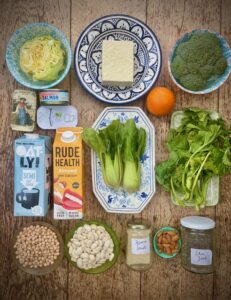
However, the general message is pretty clear.  There are some stand out plant-based calcium sources.  As far as vegetables are concerned, kale, turnip greens, broccoli, bok choy, chinese cabbage are all leafy greens with high to high-medium calcium levels.
Chickpeas, navy beans, soybeans and white beans have good amounts.  Almonds are high in calcium (also high oxalates so go easy), and sesame seeds are high (think tahini paste in dressings, sauces…)
Two dried figs will give a 65mg hit and an orange 55 mg.
In addition, choosing a calcium fortified plant mylk or plant yoghurt will make a big daily difference.

And if you eat animal protein, a small can of sardines in your lunch salad will pack a big punch, more than canned salmon with bones, which is nonetheless a good source.  Eggs surprise me as they give us so much, but here they offer very little calcium (unless you munch on the shell, which I’d not recommend),

These above-mentioned foods – as well as dairy, of course –  kept coming up on various sites.  There was good consensus about their calcium worth.  I used the International Osteoporosis Foundation calcium calculator list as well as the Bone health and osteoporosis foundation, and an NHS site.
When I couldn’t find some foods I like to eat (samphire or seaweeds), I typed in amount of calcium for that food.  I cross checked a few because of some oddities (who the heck is eating uncooked chickpeas or raw butterbeans?); also due to some striking variances in Ca milligram amounts.  As stated above, I can only put this down to different sources, growing conditions in different countries/oceans and different processing.

Googling lists, and checking milligram in calcium may feel a bit ho-hum tedious, but you only need to do the maths once, then you have your very own calcium score.

Apart from the above, I’ve listed below a few random high-to-moderate calcium foods to help you get started.  Also some info about oxalate foods, which can block calcium.  I’ve included a few of the disparate ranges from different sites in the hope that someone out there will find some definitives – let me know please 🙂

A final word, no maths, no counting.
When it comes to health, very little works in isolation. Strong bones are not simply about calcium, but this post isn’t about the other players like magnesium and phosporus, boron, D3 and K2.  Nor is it about the importance of gut health and nutrient absorption, immunomodulation, and the gut-brain-bone axis.  I’m also not touching on the very essential role resistance or weight-bearing exercise plays, how it stimulates bones, egging them on to remodel and strengthen; the same mindset as use it or lose it, or do or die.

I’ve focused on calcium because it’s so often NOT on our radar, and also because food is a safe way to improve our calcium levels.
Saying that, if your calcium intake remains low even with some food changes, you can now work out how low it is, and supplement accordingly, instead of taking a one-size-fits-all high dose which may cause bloating or digestive issues and potentially lead to hypercalcaemia, kidney stones or possible heart problems.  There are a number of calcium supplements which range from low to higher levels. Contact me if you can’t find them.
And if you’d like to read more about bones, the full gamut on how to avoid osteoporosis, the above McCormick book, The Whole body approach to Osteoporosis, is very good. However, there are many other good books out there.

Wishing you all a happy weekend, and if you’re in a sunny place, grab lots of Vit D3.  Among many other talents, Vitamin D3 is also a big player in bone health 🙂


Food list:

kale, cooked, 1 cup/c130g = 170-200mg calcium
broccoli, cooked 90g   =  50 – 100mg (yes, different lists!)
bok choy, cooked 70g = 160 – 180mg
turnip greens, cooked 52g = 100 – 190 mg
2 dried figs = 65 mg
1 orange = 55 mg
tahini, one tbsp, 15g = 50 – 60mg
tofu, firm, 100g = 120 – 300 mg
plant-based mylk, soy, almond, oat 100 ml = 120mg (a chai latte therefore could be c 240mg Ca)
chickpeas, 100g = 60 – 100mg
soybeans, 150g = 170-470mg (!)
white beans (eg. butterbeans, cannellini beans) 1 cup = 160mg
canned sardines or pilchards, small tin = 350 mg (however I also found a list stating 500mg – due perhaps to different ocean source & processing?)
canned salmon with bones, small tin:  70mg – 200mg (one source, Cheena, a Canadian wild sockeye states a whopping 2000mg for their large 180g can)
almonds, 10 nuts, c 12g = 32mg
sesame seeds, 15g = 100 mg
kelp (like kombu) and wakame, 100g =  150 – 168mg
samphire, 100g = 150mg

Dairy:
cheddar, 30g = 240 mg
fetta, 60g= 270 mg
full fat yoghurt, 170g = 310 – 380mg
semi skmmed milk, 200ml = 240mg

Note: spinach has high calcium content but is also a very high oxalate vegetable, much higher than, say, kale.  It is often mentioned as NOT being a recommended calcium source food since oxalates are compounds that bind with minerals, preventing their absorption;  minerals such as calcium and magnesium.  So it would be wise to eat far less-to-no spinach if you have osteopenia.  If you do a search for high oxalate foods you may find you’re eating too many of them daily, so, reducing them would be recommended if you are concerned about bone loss.