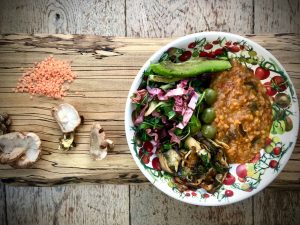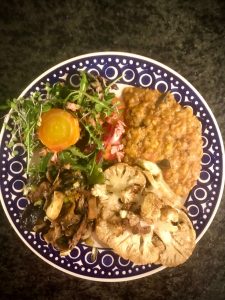
Over the years I’ve tried variations on this lentil bolognese theme and it’s now grown into a delicious concoction of tried and tested recipes. Packed with vegetables it cooks into a deep, rich-flavoured stewy-type sauce.
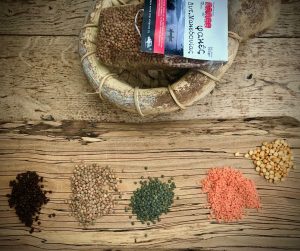
I often use puy lentils as they hold their form well, but brown lentils also work although they can become mushy if overcooked. Best to do a taste test after c 20 mins to see if their texture is to your liking.

Last weekend I thought this recipe might work with a Christmas vibe, so I added cranberries and chestnuts to the base veg mix.
I probably added them to the pan too soon! Most of the fab sour-fruitiness of the cranberries was cooked away, plus I couldn’t really taste the chestnuts. On my second attempt the other night, I stirred in a handful of fresh cranberries for the last 8 mins of cooking. Gave the whole dish a very festive look.
So, if you feel like a change over the silly season, a rice or pasta dish instead of roasted everything, then give it a try. Perhaps even a dollop of cranberry sauce on top!


Some lentil advice:
I always soak lentils despite packet instructions, or the powers that think-they-be, claiming it’s not necessary as they’re small.
Small or not, they belong to the pulse/bean/legume family, and this family contains oligosaccharydes, a type of carbohydrate (it’s the ‘O’ in FODMAP* ….ohhh!).
Our gut microbes break down these carbs, and in doing so, produce beneficial compounds but also gases which can cause bloating/wind/discomfort for some.
Soaking overnight will reduce the amount of ‘Os’ and make them easier to digest. And this soaking will also reduce the amount of phytic acid that we mainly find in the outer layer of the pulse, something that can interfere with enzymes that help us digest. Phytic acid also binds to minerals in our food, and can prevent their absorption. We need minerals! Our calcium, magnesium, iron, zinc, potassium….so there’s only gains to be had by soaking those lentils!
Ok, enough lentil chat.
Ingredients
serves 4, with rice or pasta
160 g soaked lentils. I used puy but try others; be aware of cooking time as some turn mushy
3 tbsp olive oil
1 onion, finely chopped
1/2 leek, green part, chopped
1 stick celery, chopped
1 large carrot, chopped
3 large or 4 small garlic cloves, pressed or finely chopped
1 can chopped tomatoes
2-3 tbsp Dorsetshire sauce (vegan type of Worcestershire sauce with no anchovies; Bonsan and The Condiment company are two examples of other vegan Worcestershire sauces)
1/2 litre vegetable broth plus half to one cup more added near the end of cooking IF you want your bolognese more liquid
leaves of 4 sprigs of fresh thyme
chopped fresh parsley for decoration

Method
Soak the lentils the night before, discard the water, rinse and sieve then you’re ready to start.
Add olive oil to a deep pan on a medium heat, and cook the onions until transparent. Stir in the chopped leek and cook until slightly softened. Add the celery, carrots, garlic and gently cook for about 15 minutes. Then come the lentils, can of chopped tomatoes, tomato puree, veg stock and the thyme leaves.
Simmer on a low to medium heat for about 40 minutes until the sauce has thickened and the lentils are cooked to your liking (I usually do a taste test around 30-35 minutes or earlier, depending on the type of lentil).
For a Christmas flavour, add cranberries for the last 8 minutes of cooking and enjoy with brown or mixed rice, or any pasta your digestion loves 🙂
*FODMAP stands for fermentable oligosaccharides, disaccharides, monosaccharides and polyols, a group of short chain fermentable carbs which can cause distressing IBS-type symptoms. The low FODMAP diet aims to exclude/reduce the amount of these in your daily foods and then try a slow introduction of each type to see which may be your symptom trigger. This diet is only meant to be short-term as it’s very restrictive.